This page was translated automatically from Turkish. Read the original
← Back to blogDaring to Look into the Darkness: Psychoanalysis
- “You draw near again, wavering forms,
- Who appeared before my clouded eyes in youth.
- Shall I try this time to hold you fast?” (*)
- The late 19th century…
Sigmund Freud, a curious and ambitious physician, has completed his training and work with prominent scientists of the time (Brücke, Charcot, Brenner, Bernheim…) and is conducting research into areas such as brain function and the morphology (structure) of nerve cells, while seeing patients at his clinic in Vienna. During this period, he is particularly interested in cases involving sudden, unexplained fainting spells, nervous breakdowns, and speech disturbances. The most important of these is a woman known by the pseudonym Anna O., who is being treated by Breuer, another renowned physician of the time. This woman, from a wealthy and prominent family, experiences severe hysterical attacks (episodes of emotional discharge that we might now call nervous breakdowns, medically described as conversion episodes). At a time when many people experiencing such episodes were thought to be deliberately staging them to attract attention, Breuer and Freud do not share this view. It becomes apparent that her episodes subside when she talks about the life events surrounding the onset of her symptoms, a change Anna O. herself describes as the “talking cure” or “chimney sweeping.” When his involvement in the case begins to affect his personal life, Breuer wishes to end the treatment. After this decision, Anna begins to develop symptoms of “pseudocyesis,” or false pregnancy. Freud believes this is related to the emotional bond she formed with her previous doctor. Described in “Histeri Üzerine İncelemeler” (Studies on Hysteria), this case has gone down in history as the first case of psychoanalysis, which seeks explanations for the causes of behaviors, reactions, and emotions that arise outside a person's control.
Humanity's third narcissistic wound
On the analytic path generally considered to have begun with this case, Freud and his followers would dare to look deeply into previously unexplored dark regions of the human mind. Freud himself would also claim that the discovery of this dark realm dealt humanity a profoundly unsettling blow. In his account, Kopernik inflicted the first major narcissistic wound (cosmological) by discovering that humans were not at the center of the universe and that their planet was merely a tiny point among other systems. Darwin then inflicted the second wound (biological) by discovering that humans were not a privileged creation but had descended through natural selection from animals that lived before them. Finally, psychoanalysis inflicted the third major wound (psychological) by discovering that humans were not even masters of their own selves and had to make do with the little knowledge they possessed about what was happening unconsciously in their minds. Beyond discoveries about the external world, this profound disruption concerning the human inner world—psychoanalysis—became a pivotal revolution in understanding humanity.
The discoveries of psychoanalysis
Freud defined psychoanalysis as “the name of a procedure for investigating mental processes that are almost inaccessible by any other means, a method for treating neurotic disorders, and a collection of psychological knowledge obtained through these means and gradually being assembled into a new scientific discipline.” Through its pursuit of the unknown, it would open the door to extraordinary creativity across almost every field of human inquiry, both for those who regarded it as a unique intellectual revolution and for those who regarded it as unscientific nonsense. Attempting a brief summary of psychoanalytic theory risks misrepresentation. Nevertheless, we can revisit its frequently discussed aspects that hold historical and theoretical significance.
In the early development of the theory, Freud observed that the moment of “catharsis,” in which patients experienced an intense emotional discharge while recounting traumatic memories, often provided only temporary relief, prompting him to explore other approaches. He began to follow the flow of patients' minds through free association, a method in which patients are expected to express every idea and image that comes to mind without censorship. This method, arguably one of his most important technical discoveries, paved the way for the discovery of the unconscious. While using it, however, he noticed that this mental flow paused at certain points, was censored, or was communicated in an altered form. He therefore defined the concept of resistance. He also described this resistance as a defense mechanism arising where the ego, our internal capacity for coping, was weak. This topic will be discussed in detail later in the article. He stated that the points at which people's resistance intensified were important for understanding their illness. Another route was the mechanism of transference, which he recognized in the relationship between Breuer and Anna O. In transference, patients direct feelings resembling those from an intense past relationship (often with their parents) toward their therapist, repeating aspects of that earlier relationship with the therapist. The therapist's recognition of this transference is crucial to treatment. Beyond resistance and transference, Freud recognized that slips of the tongue, simple acts of forgetting, lateness, jokes, and symbols in dreams were also important routes for tracing the unconscious. He attributed all of these to a defense mechanism he called “repression.” In other words, mental contents unacceptable to a person's ego are repressed from consciousness. Because the (psychic) energy of the repressed content continues to exist, it reaches consciousness through certain symptoms, but in a form very different from its original one. The repressed is the source of almost all human acts—language foremost among them.
He proposed that drives underlie all these mechanisms. Drives are excitations originating in the body that seek satisfaction and discharge as soon as possible. These excitations, repressed yet requiring satisfaction to reduce psychic tension, undergo various transformations and adopt disguises to enter consciousness. In this account, unconscious material undergoes a series of changes, much like a game of telephone, eventually producing a symptom that appears entirely unrelated to its source. When this symptom is recognized in a dream, free association, or a slip of the tongue and then followed, it becomes possible to explore more deeply and bring the underlying unconscious material into consciousness. This approach rests on “psychic determinism (psychic causality),” the idea that no psychologically originating phenomenon arises randomly, but is determined by particular relationships or connections.
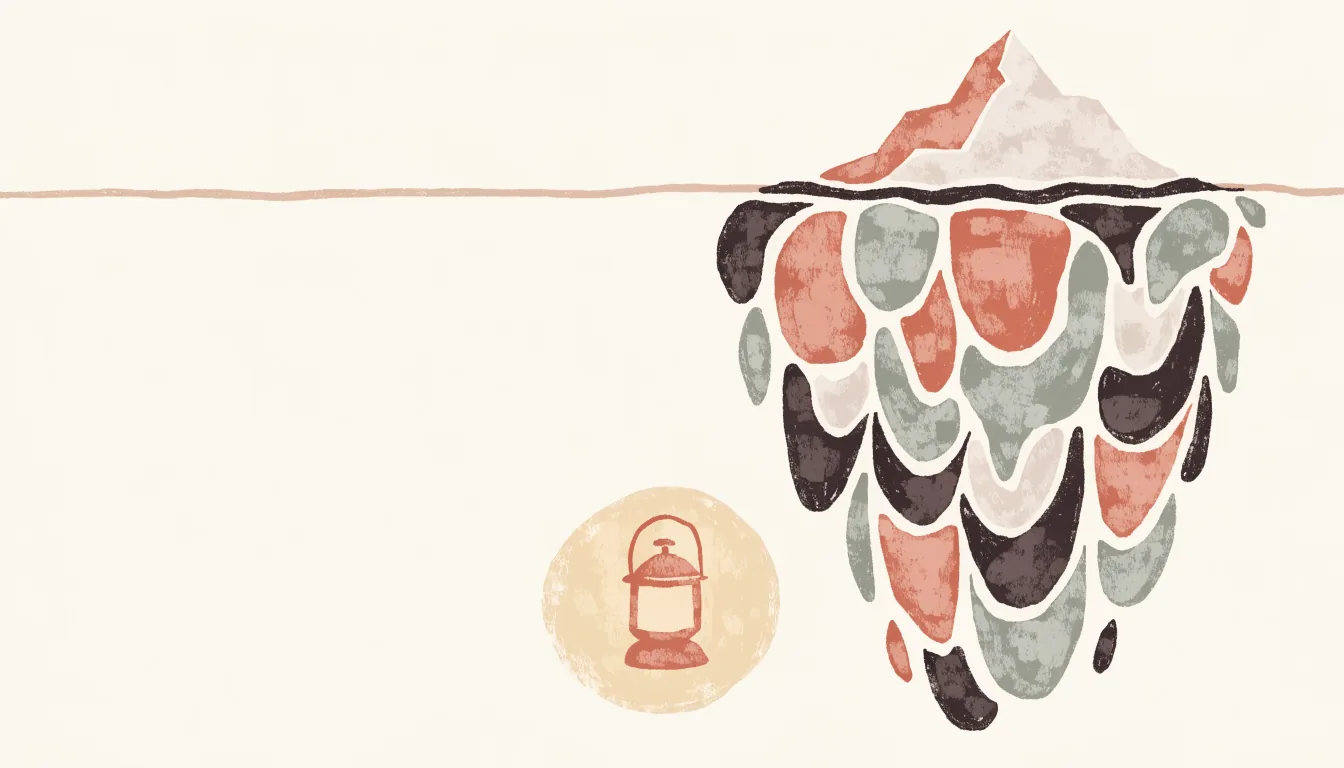
To better understand what he called the psychic apparatus, Freud needed various theoretical classifications. The first was his “topographical theory,” which defined the distinction between the conscious, preconscious, and unconscious. The preconscious contains ideas of which we are not ordinarily aware but which can be brought into consciousness with a small reminder or some effort, whereas the unconscious constitutes the largest part of the psychic apparatus. Although some translations and everyday usage refer to the “subconscious,” Freud's account is more accurately described as something outside consciousness rather than beneath it. This theory was not formulated as a hierarchy of above and below. The unconscious comprises all mental contents and processes that cannot be accessed through conscious effort. Freud proposed that its most important contents—those most subject to repression—were drives of sexual origin. Another of Freud's propositions that provoked at least as much opposition as his hypothesis of the unconscious concerned childhood sexual drives. His bringing together of “childhood” and “sexuality” in his theory was as revolutionary as the unconscious and equally unacceptable to mainstream academia. By infantile sexuality, Freud meant the totality of a child's experiences of growing up within the family. These drives are initially directed toward the child themself and later toward an external object (often the primary caregiver); when they are repressed because they are incompatible with external reality, the individual can enter the “sociocultural” sphere. These repressed drives lose their sexual character and, through the defense mechanism known as sublimation, are transformed into other qualities (socially acceptable forms), becoming the source of the person's vital energy.
His theory of psychosexual development, which approaches drives from a developmental perspective and relates the child's psychic forces to an anatomical dimension, continues to influence clinical assessment. According to this theory, libido (vital-sexual drives) passes through different stages. Here, libido has a theoretical meaning distinct from its everyday use—something we might call general life energy. In the oral stage, the sensitive region is the mouth. Gratification therefore occurs through the mouth (feeding, taking in). In the anal stage, defecation (retaining, releasing) predominates, and the child begins to distinguish external objects and position themself in relation to them. The next stage is the phallic stage, in which the sensitive anatomical region is the genitals. The Oedipal conflict experienced during this stage, which is proposed to be a necessary experience for entering the “social” sphere, was one of Freud's most unsettling hypotheses. During this period, the child moves from a dyadic (two-person) relationship toward establishing a triadic (three-person) relationship. The subsequent “latency” stage lasts until adolescence and is characterized by intense repression and the establishment of socially directed sublimations. According to this broadly outlined developmental perspective, neuroses originate in “inhibitions” and “regressions” arising from drives that were not satisfied (or were not frustrated) during these stages.
Recognizing the limitations of the topographical theory, Freud defined the distinction between id, ego, and superego within the psychic apparatus. He called this the “structural theory.” The id, which dominates the newborn's psychic structure, operates according to the pleasure principle and is entirely unconscious. Under the pleasure principle, drives seek constant and immediate gratification. Temporality, spatiality, and causality have no place in this realm. The unconscious is timeless… Such a structure, however, is incompatible with external reality. The ego therefore develops from the surface of the id as a domain that reconciles drives with external reality. The ego is the part of the psyche responsible for assessing reality and adapting impulses from the id to the external world. Thus, the transformations, slips, defense mechanisms, and so forth described above, through which unacceptable drives pass in order to enter consciousness, are functions of the ego. The reality principle predominates here. At this point, a brief digression is warranted: “ego,” a concept seriously misused in everyday language, is fundamentally unrelated to conceit or selfishness. A strong ego indicates that a person can regulate their drives, maintain a balance between external reality and their inner world, and form healthy relationships. Conversely, people with weakened or underdeveloped egos show poor adaptation to external reality, with impulsive behavior, impaired emotional regulation, and unstable relationships. The superego is a largely unconscious part of the psyche that develops from the ego through the internalization of cultural, social, and traditional values and prohibitions. The formation of the superego enables people to judge themselves and experience guilt.
Drives Are Repressed by Ego Psychology
While early psychoanalytic theory worked with the unconscious, the id, and drives, Freud's later work and the psychoanalysts who followed him focused more on the ego. Accordingly, the aim of psychoanalysis became strengthening the ego and working on ego functions such as the sense of reality and control of thought. Naturally, this shift arose from a series of practical needs. Some later psychoanalysts, however, interpreted it as “a revolutionary idea gradually surrendering to the established order.” Indeed, drive psychology, much like the drives themselves, underwent repression.
Alongside this, fields such as object relations and self psychology developed, offering conceptual frameworks based on the infant's relationships with their first external objects (other people, for example). Important advances were made in understanding clinical conditions such as borderline and narcissistic personality disorders, which had previously been considered unanalyzable. Infant observation studies also made it possible to contribute to psychoanalytic theory, which had previously been derived largely from the analysis of adults.
From the subject of the Enlightenment to the subject of psychoanalysis
With Descartes, who laid intellectual foundations for the Renaissance and the Enlightenment, the subject came to occupy the position of one who “thinks and knows.” For him, thought was the essence of mental substance. A person could not have a thought of which they were unaware. By contrast, Spinoza, although a rationalist like Descartes, developed a significantly different intellectual framework, arguing that free will was an illusion and that humans were not masters of their desires. Together with Nietzsche's idea that primitive tendencies lay beneath the apparent purposes of human behavior, these views offered intuitions about a nonconscious mental realm. Nevertheless, it was Freud who provided a comprehensive account of the unconscious and displaced consciousness/thought from the center of the subject. For him, the subject actually emerges at the most unexpected moment. It appears in slips of the tongue, acts of forgetting, and dreams. What appears in these moments truly belongs to the subject. Thus, in place of Descartes's existing subject, who says “I think” and is aware of thinking, there emerges a nonconscious subject, revealed when someone intends to say “I am thinking” (düşünüyorum) but slips and says, for example, “I am falling” (düşüyorum). Indeed, through the lens of Lacan, one of the most important figures in the theory after Freud, the human being as a psychoanalytic subject is defined as “not one who thinks, but one who desires.” Leaving aside the debate over whether this constitutes the third and most important narcissistic wound, as Freud claimed, the dethroning of consciousness or thought has secured an undeniable place in the intellectual paradigm of the modern age.
Although Freud began his work with the aim of understanding and resolving neuroses and mental illnesses, he stated that the theoretical framework he developed was highly useful for understanding societies, both historically and in the present. In “Totem ve Tabu” (Totem and Taboo), he offered interpretations based on anthropological studies of incest prohibitions and taboos observed in primitive tribes. He demonstrated the importance of the laws, prohibitions, and collective emotions arising from the dynamics between the father as leader of the horde and the group's men and women for understanding leader–group relations in contemporary society. In “Kitle psikolojisi” (Group Psychology), he described groups as collections of individuals who have placed one and the same object in the position of their ego ideal. Today, psychoanalysis influences many different fields, including sociology, philosophy, political science, communication, and economics, and is studied across all areas of the arts, particularly cinema (psychoanalytic film theory). The theory has already extended far beyond the clinic, confirming Freud's prediction in one of his writings that “…in the future, psychoanalysis will gain recognition more as a science of the unconscious than as a therapeutic method.”
Revolution or Fraud?
Can psychoanalysis, then, be called a science? We know that Freud's initial goal was “Bilimsel Bir Psikoloji Projesi” (Project for a Scientific Psychology). He wanted to find a correlate of mental functioning in the brain. “The aim of this project is to demonstrate that mental processes are quantitatively determined states of specifiable material particles.” We can also see that his theory was grounded in findings from anthropology and evolutionary biology. In particular, we know that Darwin's “Türlerin Kökeni” (On the Origin of Species) was one of the most important books in Freud's library.
According to Freud, the life and death drives consisted of energies of entirely organic-biological origin seeking discharge. He regarded drives, individual behaviors, and social dynamics as biologically rooted inheritances from our ancestors. Despite this background, Freud's theory began to include increasingly speculative ideas as it ventured into the elusive world of human thoughts, emotions, and behavior. During his lifetime and afterward, it faced harsh criticism as a form of charlatanism. The Nobel Prize-winning British biologist Peter Medawar called psychoanalysis “the most stupendous intellectual confidence trick of the twentieth century.” A considerable number of intellectuals from different backgrounds regarded psychoanalysis as unscientific and ideological. Critics argued that it did not question social issues, classes, or institutions, but concerned itself only with their manifestations in the individual's psyche and the unconscious origins of individual responses. In fact, Freud approached almost every human phenomenon with the same curiosity, seeking to understand changing social structures and cultural phenomena. Moreover, drawing on T. Parman's view that psychology, in moving away from psychoanalysis, has become a statistical science that sidelines economics, history, and geography while prioritizing mathematics, we can argue that these criticisms are mistaken and unfair.
Karl Popper, for his part, devoted considerable attention to criticizing psychoanalysis in his work on the philosophy of science. According to him, scientific theories must be falsifiable through empirical propositions derived by logical means. Psychoanalysis, for several reasons, is an unfalsifiable theory. While it seeks explanations for the human mind within a framework of causality, the explanations it offers are not falsifiable, even when their effects are observable and they appear convincing. This is because psychoanalytic interpretations are not experimentally testable but entirely theoretical/hypothetical. Although infant observation studies and clearly delimited clinical studies began later, these have not yet met the expectation that scientific findings be reproducible, falsifiable, and experimentally testable. Despite all this, psychoanalysis has been a vibrant field of competing theories from its inception. Contrary to the criticisms, psychoanalysts have not accepted the theory unquestioningly as a religious belief, but have sought ways to move beyond it and invalidate it. It continues to retain its dynamism through this transformative and explanatory character.
The fact that Freud, who began his career as a scientist, was deemed worthy by his contemporaries of the Goethe Prize for literature rather than a scientific award may reflect the distance maintained from psychoanalysis. On receiving the prize, Freud himself expressed his surprise: “With this award, which was unexpected for me, you are calling me beyond this field.” It is also significant that, years later, the psychiatrist Eric Kandel, a Nobel laureate in Physiology or Medicine, recommended that psychoanalysis be taken into account in modern neuroscience research. Neuropsychoanalysis, which explores the relationship between psychoanalysis and brain mechanisms and has attracted scientists' interest in recent years, also stands as an intriguing theoretical and experimental field.
Afterword
Anna O. did not recover as Freud and Breuer described. She subsequently required inpatient treatment on numerous occasions. Although it proved misleading even in its first case, psychoanalysis has constructed an immense structure within the darkness along the path it opened to understanding the depths of the human mind, its illusions, and what it conceals from itself. Since its earliest days, this structure has been dismantled and rebuilt, revised and transformed through the questions it asks and the criticisms directed at it. Having moved beyond the medical practice from which it emerged, it has become essential to understand in almost all the human sciences, and it stubbornly continues to make its presence felt in academic, intellectual, artistic, and other fields.
Sources Consulted
References
- Althusser L (2009). İnsan Bilimlerinde Psikanalizin Yeri. Cogito: Freud ve Kültür. Yapı Kredi Yayınları; 49, 117-145.
- Binbay T. Psikanalizin Bilim Sorunu Bilimsel Bir Psikoloji Projesi’nden Nöropsikanalize. Madde, Diyalektik ve Toplum, Cilt 3, Sayı 3; 2020.
- Freud S (2009) 1930 Goethe Ödülü Dolayısıyla Frankfurt Goethe Evi’nde Konuşma. Cogito: Freud ve Kültür. Yapı Kredi Yayınları; 49, 199-205.
- Freud S. Haz İlkesinin Ötesinde. Çev: A. Babaoğlu. Metis Yayınları; 2001
- Freud S. İki ansiklopedi makalesi. Kapkın E, editör. Ruhçözümlemesinin Tarihi. 1. baskı, İstanbul: Payel Yayınları; 2000. s.129-56.
- Freud S. Ruhçözümlemesine Giriş Konferansları. Ed: Kapkın E, Kapkın A. Payel Yayınevi; 1998.
- Freud S. Ruhçözümlemesine Yeni Giriş Konferansları. Ed: Kapkın E. Payel Yayınevi; 1998.
- Parman T (2009). Bugünü Psikanalizle Tartışmak. Cogito: Freud ve Kültür. Yapı Kredi Yayınları; 49, 65-74.
- Taşkın O. Psikanaliz ve Psikanalitik Psikoterapi. Turkiye Klinikleri; 2 (2); 2009.
- Tura SM. Freud’dan Lacan’a Psikanaliz. Ayrıntı Yayınları, İstanbul, 1998.
We thank Dr. Altan Eşsizoğlu for his valuable and guiding contributions.
The opening lines of Goethe's Faust: quoted by Freud, who received the Goethe Prize for literature in 1930, when discussing his intuitions concerning the discoveries of psychoanalysis
This article was first published in the special section on Psychoanalysis in Bilim ve Ütopya (2020).