This page was translated automatically from Turkish. Read the original
← Back to blogHumanity at the Wheel: Technology, Speed, and Mental Health
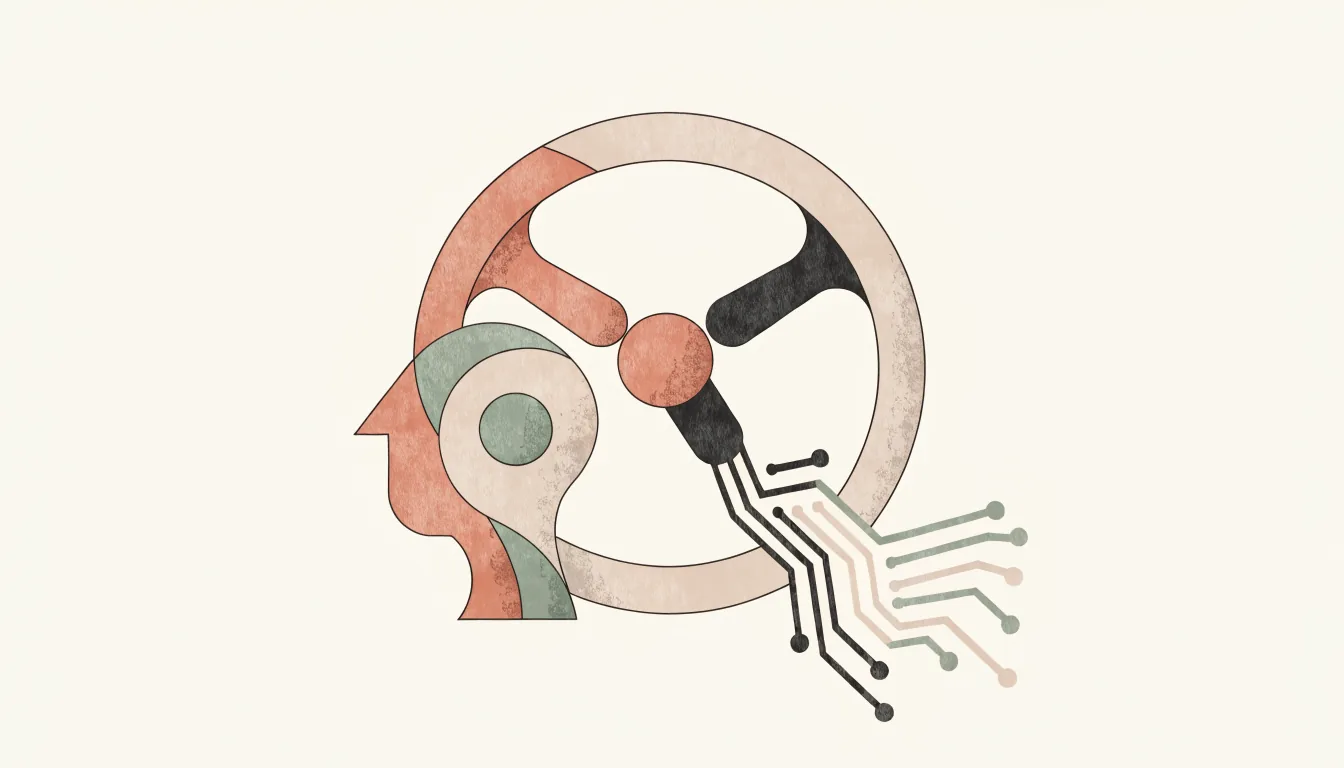
Humanity’s journey stretches from stone wheels to galloping horses, from locomotives billowing black smoke to iron birds soaring above the clouds. Smoke signals gave way to carrier pigeons, and, in time, rotary telephones became the ancestors of smartphones. Typewriters turned into keyboards, and computers too large to fit in a room became iPads small enough to slip into a handbag. The internet, celebrating its 35th birthday, could still be considered one of the young offspring of the technological world! Since the birth of the internet, which eliminated the distances separating people in communication, technology has generated new ideas, brought forth inventions, and created social change with each passing year. But how does technology, drawing on the past and shaping the present, mold the future?
Thanks to technology, we are accelerating scientific research, making medical advances, and fighting disease with greater strength. By connecting the seven continents, we communicate with different cultures, collaborate on projects, and overcome cultural barriers together. Cognitive evolution is a field that examines human capacities for thinking, problem-solving, and learning from an evolutionary perspective. Technological advances, however, are taking this evolutionary process into an entirely new dimension. People can now rapidly share, transmit, and store information. Access to information and the pace of learning have thus increased rapidly. One of the most striking consequences of technology’s divergence from biological evolution is that it enables people to access and process a rapidly expanding pool of data. With a single click, we reach the information we need within seconds; we can be both recipients and providers of information. Technological evolution thus moves far beyond biological evolution, bringing revolutionary change to human life. While biological evolution changes human physical characteristics over thousands of years, technological evolution transforms human mental abilities and social relationships almost overnight. The need for safety and security, which comes immediately after physiological needs in Maslow’s hierarchy, is met through digital codes, iron doors, and sensitive alarms. The internet, digital devices, and artificial intelligence are driving this revolution in access to information at full throttle. In this context, we see that the interaction between cognitive evolution and technological advances has a profound impact on people’s thinking abilities and information-processing processes.
People can now rapidly access scientific articles, data, and information from all over the world. From economic upturns to the devastating force of natural disasters, from human-made events to celebrity scandals, every piece of news can spread within seconds. The entire world reaches us through the 200-gram device we hold in our hands. Artificial intelligence and virtual reality, which we once watched in science-fiction films with our mouths agape, have continued to develop in recent years, astonishing us along the way. We marveled at the abilities of the artificial intelligence named HAL in the 1968 film 2001: A Space Odyssey; by 2024, artificial intelligence had moved from a spacecraft into our homes and begun helping us with everyday tasks. From mathematical problems to political views, from creative writing to generating an image from scratch, its knowledge and skills grow by the day. Humanity is stepping from reality into virtual reality; with the metaverse1, we can live lives of our own design, virtually step inside games through virtual reality headsets, and become characters in films. We experience this world through an avatar we create rather than as a flesh-and-blood person. Meanwhile, glamorous Social Media, perhaps technology’s most dazzling daughter, is nothing short of a psychological revolution! We are talking about a transformation in relationships that stretches from love letters to dating apps, from neighborhood gatherings to “friend requests.” Even our vocabulary has gained new words: Like, comment, share! Through Facebook, we rediscovered our elementary school classmates and closely followed the latest developments in their lives. Twitter became, at times, a diary anyone could read and, at others, a way to raise our voices about global events. Instagram brought the photo albums gathering dust on shelves back to life in digital form. Job applications, food orders, and clothes shopping went digital; even new friends and potential romantic partners found a place on social media. While technology has such a profound influence on the world around us, how does it touch the world within us?
Looking back over the past decade, our working lives had begun moving gradually from offices into homes: initially, only freelancers made cafés their home base and carried out their tasks there. Later, with the arrival of the pandemic, the range of online jobs and professions began to expand; so much so that everyone who did not need to be physically on-site turned their home into an office, one by one. Online platforms ushered in a new era, becoming an important tool for working with both domestic and international clients. Education moved from classroom blackboards to televised lessons, psychotherapy moved from consulting rooms to home studies, and business suits gave way to pajamas. The beeps of Akbil transit cards grew quieter, lunch queues grew shorter, and the era of the necktie ended. Although working online offered convenience, it also brought a profound sense of isolation into our inner lives. The office is not just a place where we work and earn money; it is also a place where we talk and socialize with colleagues. Coffee breaks, cigarette breaks, and after-work activities are, in fact, opportunities for sharing. Joint projects with teammates, stressful emotions made less burdensome by sharing them, and enjoyable activities outside work deepen and strengthen interpersonal relationships. Employees develop a sense of belonging to an organization through resources such as daily social interactions with colleagues and managers1. The shift to remote work has reduced many opportunities for social interaction, including support and feedback2. The effects of this isolation can be examined through the belongingness hypothesis proposed by Baumeister and Leary in 19953. According to this theory, people have an intrinsic motivation to form and maintain interpersonal relationships. Frequent contact with others serves to foster a sense of belonging and strengthen relationships4. Thus, although online work makes our lives easier in certain ways, it is undeniable that it also has aspects that adversely affect our mental health over the long term.
One of technology’s greatest influences today is social media platforms, which envelop all our lives like a web. These platforms are places where people interact, share snapshots of their private lives, spread their ideas, and expand their social networks by meeting new people. Social media generates financial gains in the business world, from helping individuals find new jobs and advance their careers to enabling companies to advertise and sell their products. In global affairs, even a single sentence written by a politician, a shared photograph, or one video can be read, viewed, and shared by millions and influence important decisions. Of course, social media brings destruction as well as creation. Bullying, particularly prevalent during adolescence and young adulthood, has moved from schools onto social media, becoming a form of abuse known as “cyberbullying.” Cyberbullying has been defined as displaying various forms of social aggression and being cruel to others by sending or posting harmful material about a person online5. According to data collected from more than 30,000 students over the past 20 years by the Cyberbullying Research Center in the United States, 54% of students experienced bullying or cyberbullying in 20236. Depressive symptoms are more common among people subjected to cyberbullying because it harms their social relationships, pushing them toward exclusion and loneliness. Another phenomenon that increases stress, anxiety, and depressive symptoms is social media’s negative impact on both our self-perception and body image7. Social media is, in fact, an illusion; we share the rosiest, sweetest, most smile-filled parts of our lives: the most romantic dinners, flawless poses put through countless filters, new job positions, new flavors we have tried, lavish celebrations, and many fun-filled snapshots… Yet there is no trace of the little argument before that dinner, the unfiltered pictures have been deleted, and there is no mention of the dozens of interviews it took to secure that position. When we drown in this whirlpool of “perfect” posts, we compare our own lives and feel more lacking, inadequate, worthless, and “flawed.” Beyond self-perception, women who spend long periods on social media may desire to be thinner, idealize very slim women, want to change parts of their bodies they are dissatisfied with, and begin unhealthy diets—all signs of disturbances in body image8. Spending so much time online can also lead to addiction; indeed, the Diagnostic and Statistical Manual of Mental Disorders (DSM-5) included this addiction in its latest edition under the name “Internet Gaming Disorder.” Given that men exhibit this behavioral addiction three times as often as women, we can see the effects of both social media and the expanding gaming world on our mental health9. There are many studies on the anger video games provoke in individuals. Consider that, with virtual reality, players do not merely see these images; they step directly inside them. We see that players identify with these characters, develop more hostile thoughts, and experience more intense anger10. Artificial intelligence, meanwhile, can adversely affect students’ critical, creative, and independent thinking skills when they rely too heavily on AI systems to solve various problems and complete their assignments11. Nobel laureate Stephen Hawking said that the development of artificial intelligence was the greatest achievement in human history, but that it would be our last achievement if we ignored its risks.
Returning to the beginning: where is humanity heading? Certainly, when used appropriately, technology can lead us toward economic development, environmental solutions, medical advances, unity, and solidarity. Technological evolution has undoubtedly outpaced biological evolution and fundamentally changed human life. This change presents both great opportunities and new challenges. As humanity, we need further research and effort to steer this technological transformation appropriately and meet human mental and emotional needs. Yet when we become dependent on technology or use it for harmful purposes, it can also take us in the wrong direction on many issues, especially our mental health. Perhaps the real question we should be asking is who is at the wheel.
References
- Golden, T. D., Veiga, J. F., & Dino, R. N. (2008). The impact of professional isolation on teleworker job performance and turnover intentions: Does time spent teleworking, interacting face-to-face, or having access to communication-enhancing technology matter? Journal of Applied Psychology, 93(6), 1412–1421.
- Hwang, T., Rabheru, K., Peisah, C., Reichman, W., & Ikeda, M. (2020). Loneliness and social isolation during the COVID-19 pandemic. International Psychogeriatrics, 32(10), 1217–1220.
- Baumeister, R. F., & Leary, M. R. (1995). The need to belong: Desire for interpersonal attachments as a fundamental human motivation. Psychological Bulletin, 117(3), 497–529.
- Van Zoonen, W., & Sivunen, A. E. (2022). The impact of remote work and mediated communication frequency on isolation and psychological distress. European Journal of Work and Organizational Psychology, 31(4), 610-621.
- Willard, N. (2007). Educator’s guide to cyberbullying and cyberthreats. Retrieved from http://www.cyberbully.org/ cyberbully/docs/cbcteducator.pdf
- Patchin, J. W. (2023, October 4). Cyberbullying continues to rise among youth in the United States. Cyberbullying Research Center.
- Gámez-Guadix, M., Orue, I., Smith, P. K., & Calvete, E. (2013). Longitudinal and reciprocal relations of cyberbullying with depression, substance use, and problematic internet use among adolescents. Journal of adolescent health, 53(4), 446-452.
- Fardouly, J., & Vartanian, L. R. (2016). Social media and body image concerns: Current research and future directions. Current opinion in psychology, 9, 1-5.
- American Psychiatric Association. (2013). Diagnostic and statistical manual of mental disorders (5th ed.).
- Chang, S. M., Hsieh, G. M., & Lin, S. S. (2018). The mediation effects of gaming motives between game involvement and problematic Internet use: Escapism, advancement and socializing. Computers & Education, 122, 43-53.
- Lavoie, R., Main, K., King, C., & King, D. (2021). Virtual experience, real consequences: the potential negative emotional consequences of virtual reality gameplay. Virtual Reality, 25, 69-81.
- Eastgate Software. (2023, December 15). 10 potential negative effects of AI in education. Eastgate Software.
- 1 Sanal Evren. Sanal ve artırılmış gerçeklik cihazları aracılığıyla kalıcı çevrimiçi 3 boyutlu sanal ortamları destekleyen, İnternet'in varsayımsal bir yinelemesidir.
This article was first published on January 11, 2024, on the web portal of the journal Bilim ve Ütopya. Since the portal has been taken offline, I am republishing the text here.